重定向System.out和System.err到JTextPane,分别用黑色红色显示(改进)
在上一篇 重定向System.out和System.err到JTextPane,分别用黑色红色显示
中讲了如何把 System.out 和 System.err 重定向到 JTextPane 上,并分不同颜色显示,其中用到了 PipedInputStream、
PipedOutputStream。那个例子还是参考的 《The Java Developers Almanac 1.4》,
翻译出来叫做 《Java 开发者年鉴 1.4》,显得多么的权威啊,我当时还真把它看成官方最佳推荐实现了,太迷信了。
可是现在看来,前面那个实现不仅代码繁琐,而且是 Bug 多多。现在重新对上回的 ConsolePane 来个新的更简洁高效的实现。代码如下:
使用方法依旧,是一个 JScrollPane,加上自己的面板上就行:
getContentPane().add(ConsolePane.getInstance(), BorderLayout.CENTER);
界面效果图同前面基本一样:
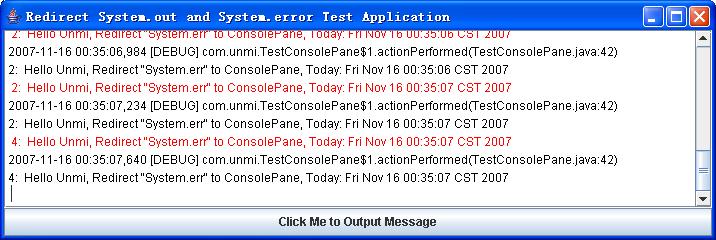
能解决的问题恰恰就是上面遗留下来的1、2、3:
1. 不再产生 java.io.IOException: Write end dead 异常
2. 输出时不再会缺几个字母,或产生空行了
3. 输出顺序根据程序执行先后能得到保证
如果希望能捕获到 Log4j 的输出,仍然依赖于要用 Log4j 1.2.13 或以上的版本,并设置属性:
log4j.appender.console.follow = true
这个问题在上一篇 重定向System.out和System.err到JTextPane,分别用黑色红色显示 Log4J 与 ConsolePane 一节中用讲,但是如果是用 SWT 的话,这个问题可以解决,不再依赖于这一属性设置了。
这段时间正在研究 SWT,感觉用起来比 SWING 舒服多了,考虑暂时放耽下 SWING 了,过阵会再写一篇关于把 System.out 和 System.err 定向到 SWT 文本控件的日志。
TestConsolePane 代码还是请见上篇日志:重定向System.out和System.err到JTextPane,分别用黑色红色显示 永久链接 https://yanbin.blog/system-out-system-err-to-jtextpane-improved/, 来自 隔叶黄莺 Yanbin's Blog
[版权声明] 本文采用 署名-非商业性使用-相同方式共享 4.0 国际 (CC BY-NC-SA 4.0) 进行许可。
可是现在看来,前面那个实现不仅代码繁琐,而且是 Bug 多多。现在重新对上回的 ConsolePane 来个新的更简洁高效的实现。代码如下:
  1package com.unmi;
  2
  3import java.awt.*;
  4import java.io.*;
  5
  6import javax.swing.*;
  7import javax.swing.text.*;
  8
  9/**
 10 * @author Unmi
 11 */
 12public class ConsolePane extends JScrollPane {
 13
 14    private JTextPane textPane = new JTextPane();
 15
 16    private static ConsolePane console = null;
 17
 18    public static synchronized ConsolePane getInstance() {
 19        if (console == null) {
 20            console = new ConsolePane();
 21        }
 22        return console;
 23    }
 24
 25    private ConsolePane() {
 26
 27        setViewportView(textPane);
 28
 29        // Set up System.out
 30        PrintStream mySystemOut = new MyPrintStream(System.out, Color.BLACK);
 31        System.setOut(mySystemOut);
 32
 33        // Set up System.err
 34        PrintStream mySystemErr = new MyPrintStream(System.err, Color.RED);
 35        System.setErr(mySystemErr);
 36
 37        textPane.setEditable(true);
 38        setPreferredSize(new Dimension(640, 120));
 39    }
 40
 41    /**
 42     * Returns the number of lines in the document.
 43     */
 44    private final int getLineCount() {
 45        return textPane.getDocument().getDefaultRootElement().getElementCount();
 46    }
 47
 48    /**
 49     * Returns the start offset of the specified line.
 50     * @param line  The line
 51     * @return The start offset of the specified line, or -1 if the line is
 52     *         invalid
 53     */
 54    private int getLineStartOffset(int line) {
 55        Element lineElement = textPane.getDocument().getDefaultRootElement()
 56                .getElement(line);
 57        if (lineElement == null)
 58            return -1;
 59        else
 60            return lineElement.getStartOffset();
 61    }
 62
 63    /**
 64     * 清除超过行数时前面多出行的字符
 65     */
 66    private void replaceRange(String str, int start, int end) {
 67        if (end < start) {
 68            throw new IllegalArgumentException("end before start");
 69        }
 70        Document doc = textPane.getDocument();
 71        if (doc != null) {
 72            try {
 73                if (doc instanceof AbstractDocument) {
 74                    ((AbstractDocument) doc).replace(start, end - start, str,
 75                            null);
 76                } else {
 77                    doc.remove(start, end - start);
 78                    doc.insertString(start, str, null);
 79                }
 80            } catch (BadLocationException e) {
 81                throw new IllegalArgumentException(e.getMessage());
 82            }
 83        }
 84    }
 85
 86    class MyPrintStream extends PrintStream {
 87
 88        private Color foreground; //输出时所用字体颜色
 89
 90        /**
 91         * 构造自己的 PrintStream
 92         * @param out 可传入 System.out 或 System.err, 实际不起作用
 93         * @param foreground 显示字体颜色
 94         */
 95        MyPrintStream(OutputStream out,Color foreground) {
 96            super(out,true); //使用自动刷新
 97            this.foreground = foreground;
 98        }
 99
100        /**
101         * 在这里重截,所有的打印方法都要调用最底一层的方法
102         */
103        public void write(byte[] buf, int off, int len) {
104            final String message = new String(buf, off, len);
105
106            /** SWING非界面线程访问组件的方式 */
107            SwingUtilities.invokeLater(new Runnable() {
108                public void run() {
109                    try {
110
111                        StyledDocument doc = (StyledDocument) textPane
112                                .getDocument();
113
114                        // Create a style object and then set the style
115                        // attributes
116                        Style style = doc.addStyle("StyleName", null);
117
118                        // Foreground color
119                        StyleConstants.setForeground(style, foreground);
120
121                        doc.insertString(doc.getLength(), message, style);
122
123                    } catch (BadLocationException e) {
124                        // e.printStackTrace();
125                    }
126
127                    // Make sure the last line is always visible
128                    textPane.setCaretPosition(textPane.getDocument()
129                            .getLength());
130
131                    // Keep the text area down to a certain line count
132                    int idealLine = 150;
133                    int maxExcess = 50;
134
135                    int excess = getLineCount() - idealLine;
136                    if (excess >= maxExcess) {
137                        replaceRange("", 0, getLineStartOffset(excess));
138                    }
139                }
140            });
141        }
142    }
143}
使用方法依旧,是一个 JScrollPane,加上自己的面板上就行:
getContentPane().add(ConsolePane.getInstance(), BorderLayout.CENTER);
界面效果图同前面基本一样:
能解决的问题恰恰就是上面遗留下来的1、2、3:
1. 不再产生 java.io.IOException: Write end dead 异常
2. 输出时不再会缺几个字母,或产生空行了
3. 输出顺序根据程序执行先后能得到保证
如果希望能捕获到 Log4j 的输出,仍然依赖于要用 Log4j 1.2.13 或以上的版本,并设置属性:
log4j.appender.console.follow = true
这个问题在上一篇 重定向System.out和System.err到JTextPane,分别用黑色红色显示 Log4J 与 ConsolePane 一节中用讲,但是如果是用 SWT 的话,这个问题可以解决,不再依赖于这一属性设置了。
这段时间正在研究 SWT,感觉用起来比 SWING 舒服多了,考虑暂时放耽下 SWING 了,过阵会再写一篇关于把 System.out 和 System.err 定向到 SWT 文本控件的日志。
TestConsolePane 代码还是请见上篇日志:重定向System.out和System.err到JTextPane,分别用黑色红色显示 永久链接 https://yanbin.blog/system-out-system-err-to-jtextpane-improved/, 来自 隔叶黄莺 Yanbin's Blog
[版权声明]
本文采用 署名-非商业性使用-相同方式共享 4.0 国际 (CC BY-NC-SA 4.0) 进行许可。